Manchester City 0-2 Crystal Palace: Our Quick Takeaways

Written by Alex Pewter

Crystal Palace. The Pride of South London and Vanquishers of European "Super League" teams with ten men. Patrick Vieira's victory over Pep Guardiola became the crowning achievement of his opening ten league games in charge as his side won 2-0. Here are our takeaways: 
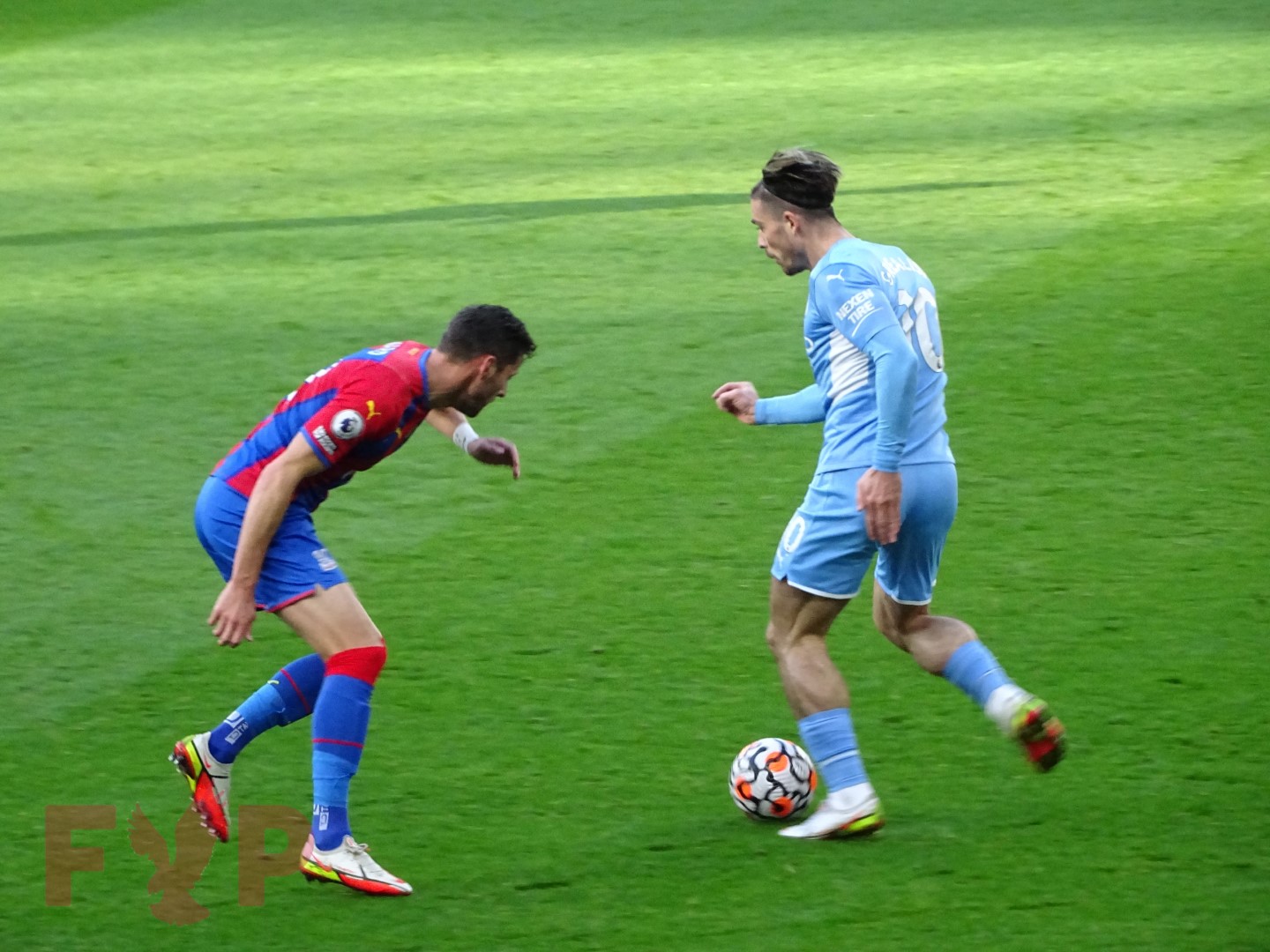
Ward Grealish 

Vieira Shuffles the Deck


On paper, a 4-3-3 formation with Wilfried Zaha, Odsonne Édouard and Jordan Ayew isn't new ground for Patrick Vieira and Crystal Palace. However, when Zaha took up the central spot, Vieira's plan became apparent. 

Making his first start following the international break, Zaha's impact on the game was immediate. In the Man City half in only the sixth minute, Conor Gallagher pounced on a heavy touch from Aymeric Laporte, starting a counter-attack.

Eluding the desperate lunge from Rúben Dias, Zaha, playing a 1-2 back to Gallagher, broke free of the defence. Having taken the ball to the left to create an angle, his low shot evaded Ederson, opening the scoring and stunning the home support.

Whereas the switch to 4-4-2 against Chelsea was too much of a departure on the opening day of the season, Vieira showed that within his standard 4-3-3, he could switch up the style with only a few changes, making use of the variety of talent within his squad. 

Knowing his team would find it difficult to hold onto possession against one of the league's top sides, Vieira elected to start Cheikhou Kouyaté to shield his defence in his role as a ball-winning midfielder. Ayew, as a defensive-winger, gave more structure to his flank covering Joel Ward.

The intent was clear. Against a side brimming with creative talent, Palace needed to smother the attacking play as best they could. The lone attacking option was to use the pace and trickery of Zaha on the break.
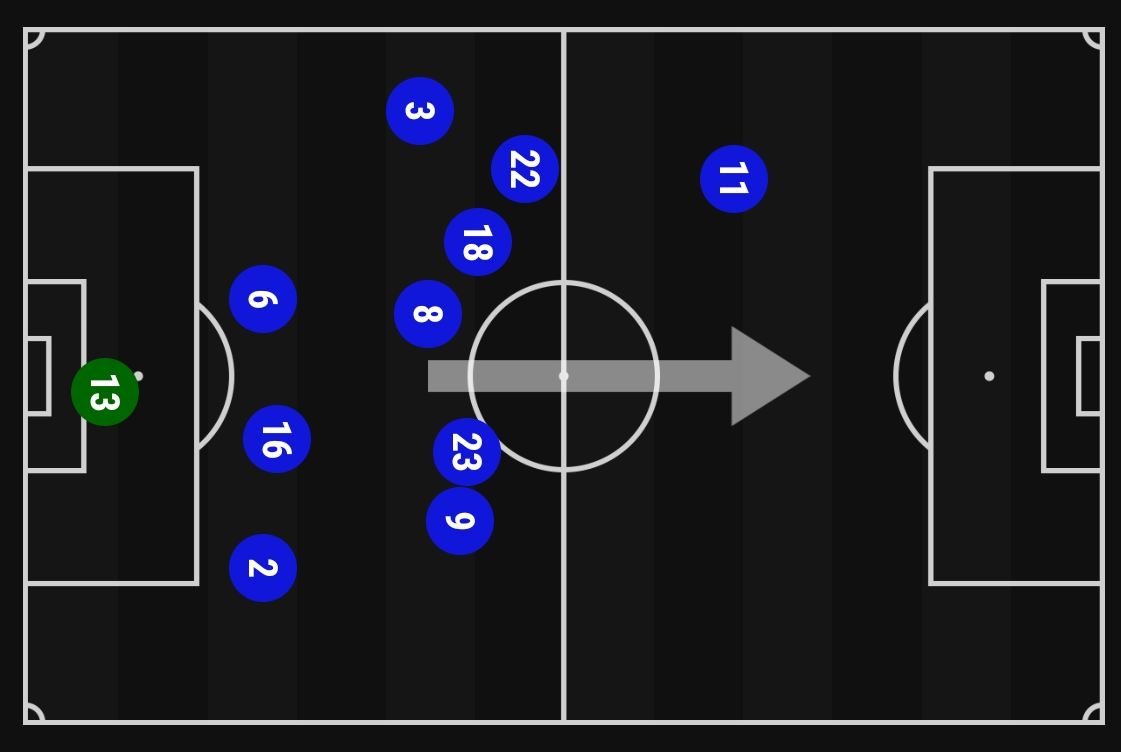
 

MCFC player positioning


Palace led early and survived the bulk of the half before the game plan paid dividends for a second time. Laporte's day went from bad to worse. Caught out again, he dragged Zaha to the ground rather than allow him through on goal. VAR couldn't save him, as emotion boiled over for the home-side. 

The first half went to Patrick Vieira against the reigning Premier League Champions. The battle against the ten men of Guardiola would be a new tactical battle entirely.
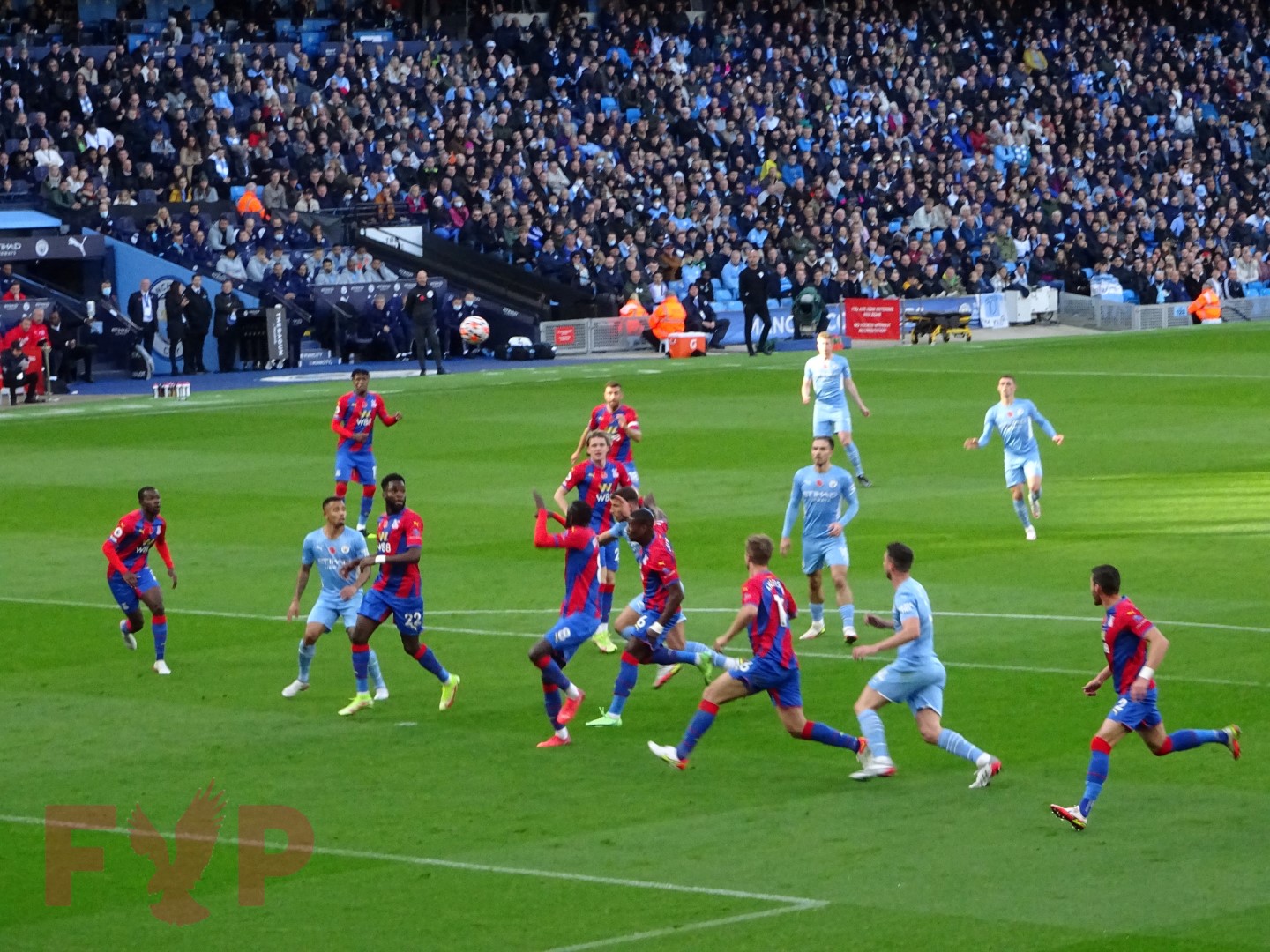
 

Kouyate Corner ManCity


Palace Show Defensive Resolve


If a team can come away with a result away at Man City, the defence is bound to have played its part. Showering the entire team with platitudes is therefore completely justified. 

The back five remained the same, with Kouyaté in front. Overall the team looked to hold its shape with every player other than Zaha sitting inside their half. City, who opted for a strikerless formation, sought to find a way through the Palace defence with their passing and skill rather than physicality. 

Tyrick Mitchell, whose talents won't be secret for long, tussled with Kevin de Bryune down Palace's left flank. Joel Ward continued his outstanding season down the right. Dealing with the likes of Jack Grealish and Phil Foden is an attritional battle for any team, and the concentration required wears a lot of teams down.

Beyond the back four, the midfield engine room played their part. Kouyaté brought the presence needed to disrupt Man City's passing. McArthur and Gallagher continue to defy expectations with tireless energy whilst being at opposite ends of their respective careers. 

In possession, it can still be unnerving to see a Palace team work the ball across the backline against the pressing of Man City, but such has been the improvement under Patrick Vieira. The danger didn't materialise. 

The final passing statistics won't be as pretty as when the team is dominating at home, but it offered relief rather than clearing and giving the ball back to City on every occasion.

Jordan Ayew, who will have been desperate to have scored with his final touch of the game as it sailed wide, continues to be an asset with his direct pressing and ability to close off passing lanes.

VAR saved the team from their only genuine error. Phil Foden fractionally called offside, delivered a perfect cross to Gabriel Jesus to equalise. Vicente Guaita looked like he misjudged the ball's flight as Jesus beat him at the near post. VAR, the villain last week, had a face-turn in this match. 


Attacking Substitutes Deliver Victory


All you can ask from a manager is for them to learn from their mistakes. The Arsenal game will have taught Vieira not to abandon the structure of his pressing midfield in favour of an extra defender. 

Had the team held out in North London, it would be more likely James Tomkins would have been the first preference again in Manchester. Instead, the three moves to bring on Benteke, Schlupp and Olise kept the pressure further up the pitch. 

The fresh legs of Benteke and Schlupp helped to keep up the energy against a City team who were able to throw Raheem Sterling and Riyad Mahrez into the match. Benteke, in particular, showed a fantastic work rate in challenging the Man City defenders, building on the foundations set by McArthur and Gallagher. 

Michael Olise is boasting ridiculous per 90 attacking statistics. Such has his impact been during second-half substitute appearances. Having already helped the team win against Tottenham and muster a comeback draw against Leicester from the bench, his late introduction set the stage once more.

Three minutes remained in regulation time. The Palace defence cleared their lines once more, this time to their young winger. Olise's dribbling turned Jon Stones inside and out on the counter-attack. Having threaded a through ball into the box, Zaha didn't immediately capitalise on it as the City defenders and goalkeeper crowded him out. 

Zaha managed to return the pass to Olise, who again, showing that mature composure Palace fans have already come to expect, calmly teed the ball up for Conor Gallagher to score the second. 

Gallagher went from initially passing the ball to Olise to start the breakaway, only to cover the length of the pitch and finish the move. His determination was outstanding, worthy of the man-of-the-match accolades.  

In the 93rd minute, Olise, again attempting to take on a City defender and attack the area, heeded Joel Ward's advice as he pointed him towards the corner flag to run down the clock. The damage was already done. 


The xG Battle
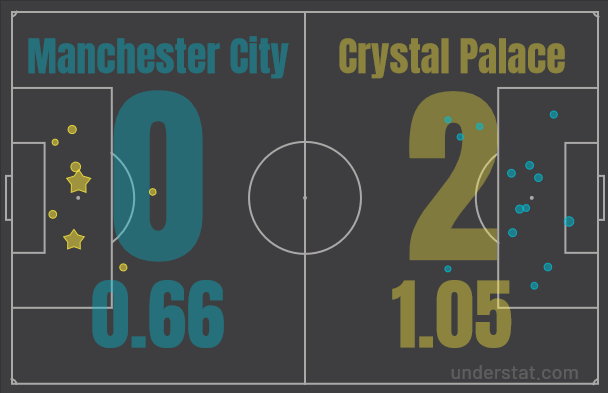
 

xG MCFC A 2021


What team can go to the Etihad Stadium and restrict Manchester City to only 0.66 xG from 14 shots on goal? A Patrick Vieira team. 

The official statistics of 14 shots to 8 and 68% possession to 32% paints a picture of domination for City, but the chances weren't clear-cut. The defence harried and blocked where possible, and Guaita moped up everything else on target. 

The best two chances of the game fell to Palace, who were clinical in finishing both. If a team sets out to be a counter-attacking side, this is the perfect result. 


Next Up: Wolverhampton Wanderers (H)


Bruno Lage's team has had an upturn in form after a slow start to the season. Three wins and a draw in the last four matches, before their Sunday fixture against Everton, have helped them climb up the table. 

Playing Wolves would have previously felt like a fixture where Palace would be underdogs in their own stadium, but this will have changed given the team is playing this season.

The talents of their Portuguese core is well known, and Vieria won't necessarily know his best XI following the performance against Man City. But that isn't a bad thing. 

Protecting the Goal - How Crystal Palace Defend Corners - Part Two

Written by Alex Pewter

Here, with part 2 of his deep dive into how Palace are conceding goals from set-pieces, is Alex Pewter. 

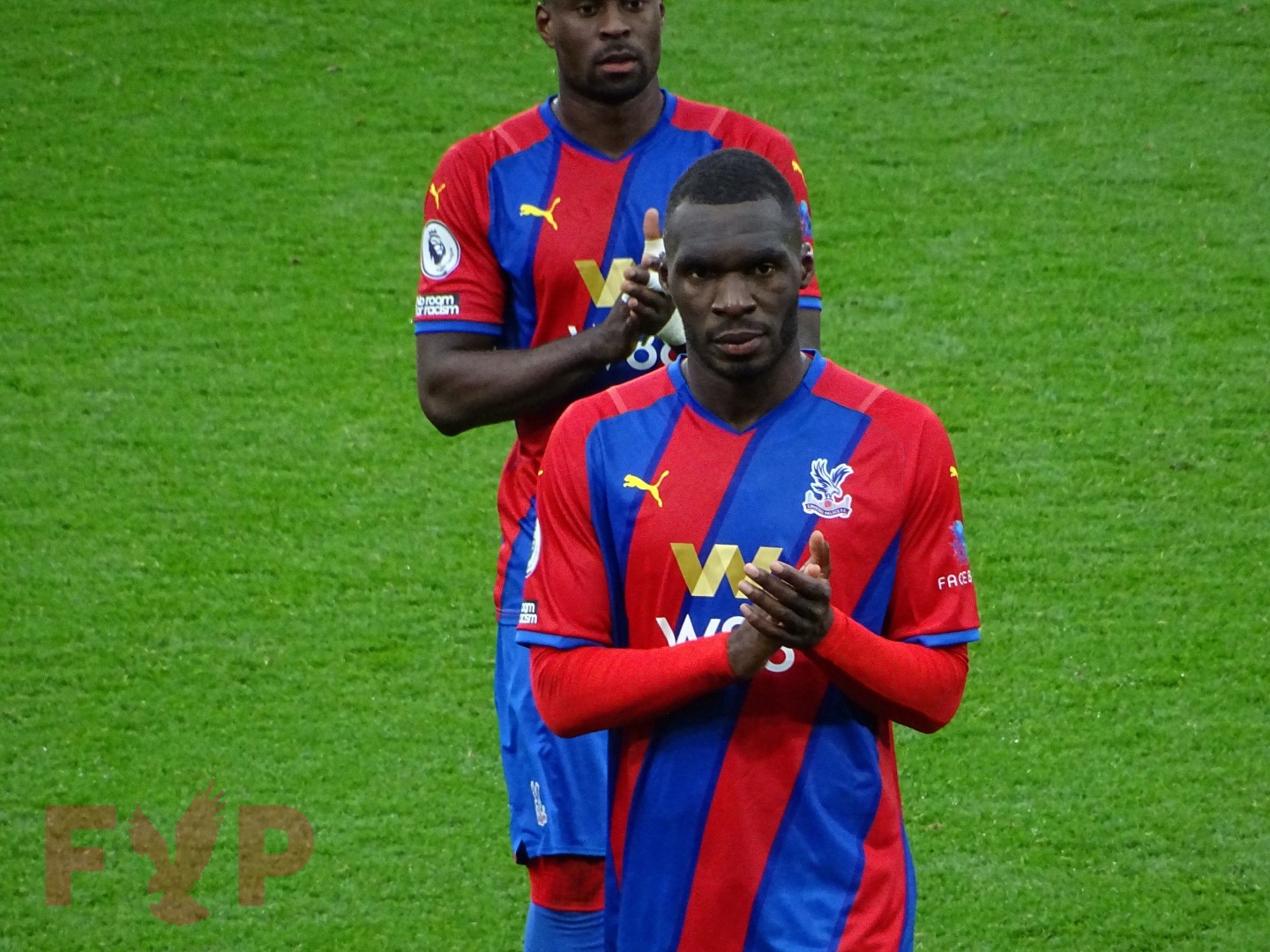
Benteke Header


Defensive Mistake, Bad Luck or Well Worked?

Having looked broadly at the issues and possible solutions for Crystal Palace defending corners, it's on to the goals themselves. Yes, Palace have conceded six goals from corners, but is it possible they just haven't had the rub of the green? Let's take a look: 


#1 Sadio Mané


Mane Goal Corner


Straight off the bat, this is the best successful corner routine Palace have faced. Tyrick Mitchell and Christian Benteke are the two "zonal" markers, with Vicente Guaita sitting slightly towards the back post. Conor Gallagher is drawn out to the edge of the box to keep Thiago in check. The rest is man-to-man marking.

The delivery from Kostas Tsimikas is perfect. Mohamed Salah is moving before the kick swings into the area. His marker James McArthur is blocked off by Virgil van Dijk and is forced to move around the back of the pack, where the run of Sadio Mané impeds his run further. 

Salah schemed wide open to win the header forces a good save from Guaita. Mané, who has already moved into the six-yard box, pounces on the rebound. 1-0


Conclusion: Well Worked


It is difficult to assign blame to any of the players on this occasion. The corner routine deserved the goal. Such was the execution. James McArthur's reaction before Mané has even taken his shot is telling. He knows he was well beaten. 

If we were to nitpick, removing Mitchell from the goal-line would have opened up the possibility of catching Mané or any other forward offside after the save, but it looks like Christian Benteke could have kept him on in any case.

Joel Ward is caught on the backfoot and cannot make it out to Salah in time, but he also loses his designated player in the process. His starting position isn't directly in front of his player like the other markers. As a result, he has lost Mané as soon as the kick is taken. 


#2 Mo Salah


Salah Goal Corner


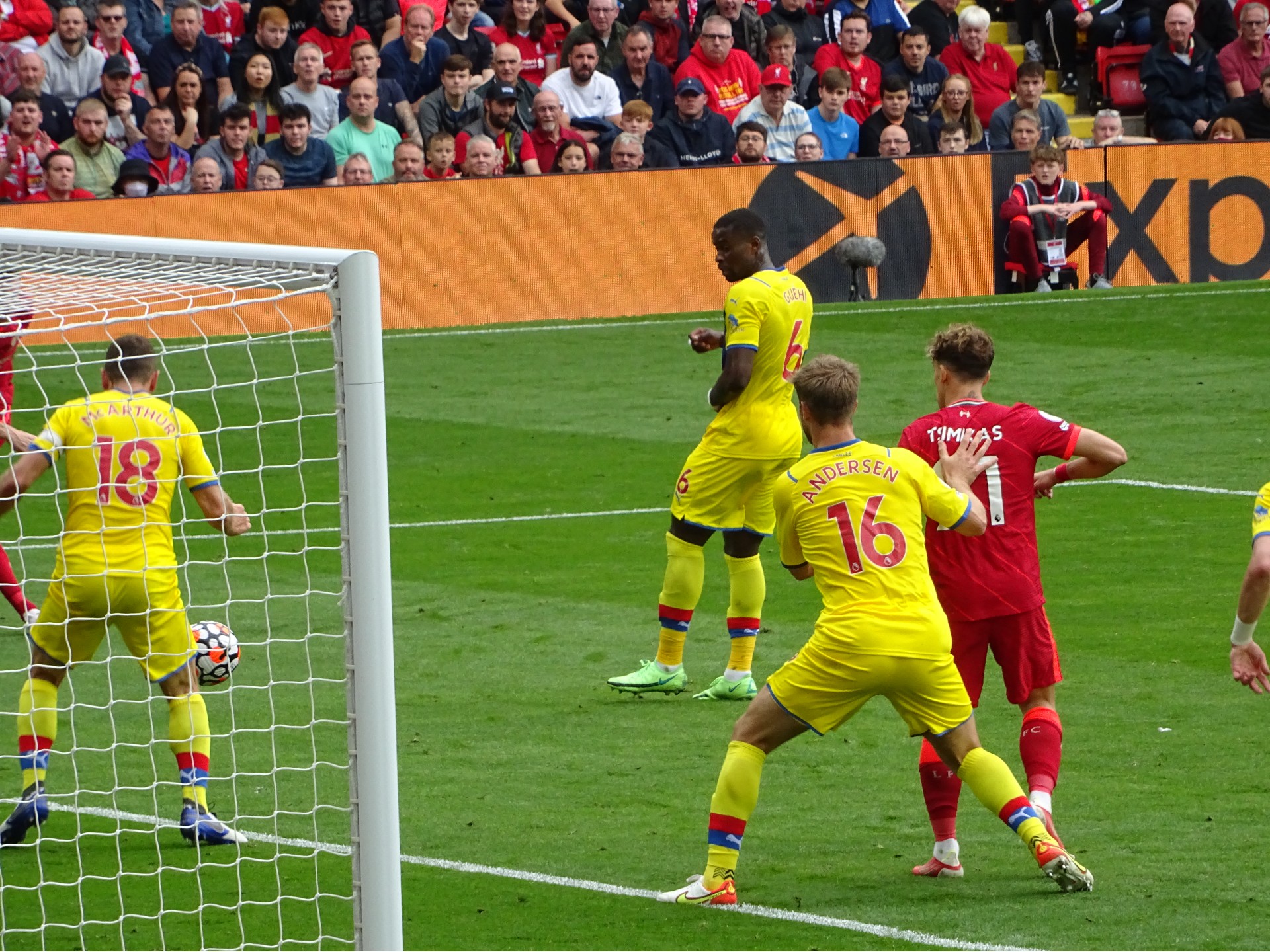
Just like the first goal, this is another well-designed move from Liverpool. Palace, though, has ten players in the area to Liverpool's four, including the goalkeeper.

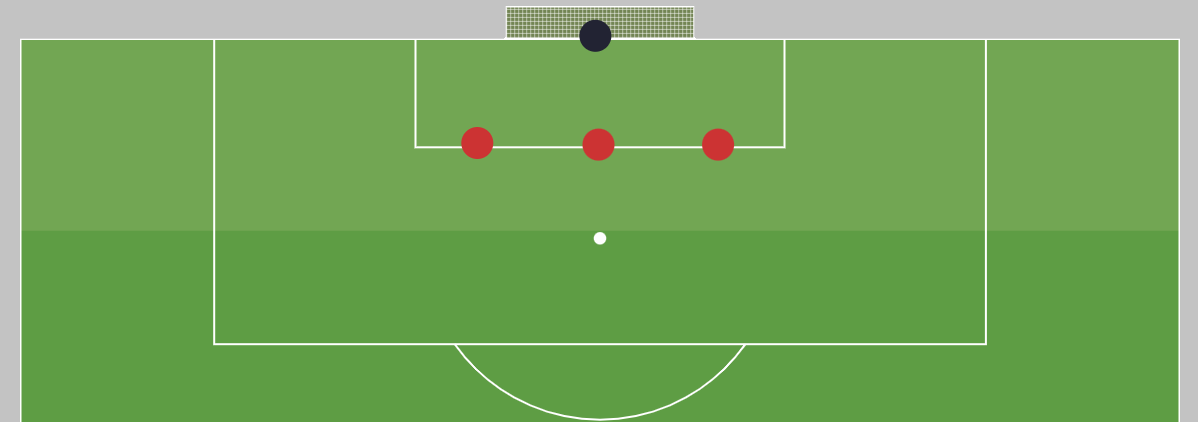
Palace's two "zonal" players and the goalkeeper are in the same location as before, albeit with Odsonne Édouard now in place of Benteke. The three Liverpool players line up one behind the other on the penalty spot, making it difficult for Marc Guéhi and Joachim Andersen to get tight to their marker. 

Despite the numerical advantage, Cheikhou Kouyaté is, in essence, in no man's land. As the free player, it isn't clear what area he is covering. Without a touch-tight marker in his way, Virgil moves around Ibrahima Konaté to win the flick-on getting in-between the Palace defenders.

Salah has already anticipated the flick on and makes his run towards the back post. His marker, Jaïro Riedewald, is ball-watching from the initial corner and loses his player completely. Salah's shot is hit at such a pace it gives Guaita no chance. 2-0. 


Conclusion: Well Worked/Defensive Error


Liverpool executed this routine to a high level again. They are one of the best sides to taking advantage of dead-ball situations. 

That said, Jaïro Riedewald takes most of the blame here, and this goal, coupled with his marking on the next one, must be a reason he hasn't been selected on the bench since this 25-minute cameo. 

The central defenders could have done better in the air, but Virgil is a 6'4" player with a tremendous vertical leap if he allowed room. Salah wouldn't usually need much space to finish, but Riedewald gave him plenty.


#3 Naby Keita


Keita Goal Corner


Keita took the headlines with this one, and it is a wonderfully struck volley from a technical perspective. Mitchell is no longer on the front post and is on the edge of the area, near the taker. Édouard is the lone outfield player free in the six-yard box.

Tsimikas, now in-swinging the ball from the other side of the pitch, doesn't manage to find a player. The movement is not as precise as the previous two goals, and it seems just to be aimed at Virgil's head.

Guaita deals reasonably well as he reaches over the top of his player and punches it away, beating two Liverpool players to the ball. He ends up on his knees and far off his line as a consequence. 

Riedewald once again makes the error, ball-watching for a second time. He drifts in beyond the penalty spot as the cross is being dealt with by Guaita. He ends up 5-6 yards off the player he was meant to be covering on the edge of the area.

Guaita, out of position anyway, is beaten by a superb strike. 3-0.


Conclusion: Defensive Error


It's hard to say this corner was well-worked, as it was a basic routine by Liverpool aiming to take advantage of their tallest player. Guaita does the hard work trying to clear the ball and would ideally want the punch to go wider but isn't at fault overall. 

Defending corners successfully and consistently isn't about individual effort but working as a unit. If that unit has a weak spot, it can all fall apart. On this occasion, whilst it had little bearing on the result, Riedewald needed to be in a position to win the second ball and block any shots coming back.


#4 Pierre-Emerick Aubameyang


Aubameyang Goal Corner


In contrast to the Liverpool game where Tsimikas was a constant threat as a taker, this goal wasn't about the quality of the corner, rather the response to the second phase. 

The ball is very overhit as it sails, untouched, beyond every Palace and Arsenal player. Nicolas Pépé collects the ball out near the touchline and is released by a 1-2 with Takehiro Tomiyasu. Jordan Ayew and Ward are bystanders as Pépé breaks into the area.

Mitchell attempts to close off the lane rather than committing fully to closing him down. Pépé's shot, an excellent curling effort from out wide, is met with a decent save by Guaita. Aubameyang is first to react, effectively given an open goal, turns in a volley with his left foot. 1-0.


Conclusion: Bad Luck


There are faults here, as the team are slow to reset. Palace have generally been good at keeping the ball ahead of them with a good structure in open play. Responding to the game when it breaks down hasn't been as consistent.

Ward and Ayew have to cover a lot of ground to try and close down Pépé, but he and Tomiyasu are quickly set by comparison. The save from Guaita deserved to keep the scores level, but he is unlucky not to get more on it. 

Most of the defence had little they could have done in this instance, apart from McArthur's positioning against Aubameyang as he allows him the outside. McArthur's attempt to check him with his arm is evaded as the striker cooly finishes.


#5 Alexandre Lacazette


Lacazette Goal Corner


Nerves setting and a catalogue of errors lead to the Arsenal equaliser on Monday Night Football. Sometimes less is more, as the decision to drop deeper whilst adding an extra central defender helped add to some of the confusion at the back. 

Palace initially deals with the corner at the near post before the taker Pépé can collect the ball and put in another cross. Andersen wildly chases the ball down along with Michael Olise, as neither manages to stop the ball into the area whilst taking themselves out of play, nothing is gained, but Andersen's height is taken out of the box.

Palace fails to organise themselves or clear their lines. Instead, they maintain a line deeper than the penalty spot. Here is where the mass of defenders backfire, as no player can get a clean head on the ball. Ward and Tomkins collide, going for the first ball, Benteke backs into Kouyaté for the second.  

Only Ben White seems to read where the ball may fall as he peels away from his marker. His volley cannons off Gabriel Martinelli, forcing a reaction save from Guaita with his foot.

The fatal moment for the defence came from McArthur, who is the lone player to drift back onto the goal-line. Alexandre Lacazette saved from being flagged offside equalises. 2-2. 


Conclusion: Defensive Error


The panic at the end of the Brighton game was repeated at the end of the Arsenal one. Patrick Vieira was guilty of sitting deeper and deeper whilst removing the pressing that helped close Arsenal down earlier in the game. Possibly this was an overcorrection due to the late equaliser the week prior. 

Too many bodies in the box, a lack of organisation and leadership was on show. The goal was the symptom rather than the cause. Bringing James Tomkins into the game isn't necessarily a wrong move. Adding him into the mix in place of Anderson or Guehi would have maintained the shape, prevented crowding in the box whilst adding a more physical presence in the air.

James McArthur was the only player to drift back onto the goal-line. Therefore this wasn't part of the plan but more instinctual. If a team wishes to commit to bringing players into that position, more of them need to do it. Guaita can have a player covering his right as well. That may have blocked Lacazette's shot on the line. If the team is asked to hold the line in these moments, everyone has to do it.


#6 Callum Wilson


Wilson Goal Corner


The best finish of the six, Callum Wilson's athleticism brought his side back into the game. Palace have set up with three players in the six-yard box, along with Guaita. Four players man-marking with Gallagher covering the edge. Eight players in the area, against five Newcastle players. 

Unlike any of the other conceded goals, this was a back-post corner. Three defenders all go for the same ball but miss the flight, leaving Jamaal Lascelles the chance to play the ball back across the box.

Emil Krafth has little time to react but can keep the ball up without much power behind it. Wilson is the first to read the ball's flight and sets himself to shoot, having drifted away from McArthur. 1-1. 


Conclusion: Bad Luck


Like the Arsenal game, although this was the first phase of defending, multiple players go for the same ball and fail to make contact. In theory, Andersen is the tallest player in the box, yet Lascelles is better positioned to win the battle.

Like we've seen in other goals conceded, the man-markers become clustered, meaning no one gets a clear sight of the ball. 

When a player does that and hits the top corner, it's difficult to be overly critical of the defence, as had he attempted the shot in any other fashion, McArthur would have shut him down. 

The outcome of the game ending as a draw was less about conceding this but playing with fine margins, to begin with, rather than putting it away earlier. 


Summary


It's a mixed bag for Palace. Liverpool is a well-drilled side when it comes to taking advantage of set-pieces, but the three-goal advantage undermined a valiant effort in open play.

Aside from Liverpool's efforts and benefit of the doubt given due to the quality of Wilson's finish, there is a lot to work on as the season continues. A lot of these goals were avoidable errors.

If you multiplied out the six goals conceded in nine games, the club is projected to concede 25 in total. That is entirely unrealistic, but given the organisation in open play, this area needs attention.


James McArthur -- The Tactically Flexible Master in Every Palace Midfield

Written by Naveed Khan

James McArthur is a Palace legend. His tactical flexibility has made him a hugely influential member of Palace's starting 11. With the midfielder enjoying yet another resurgence under Patrick Vieira, here's Naveed Khan to highlight his brilliance.  


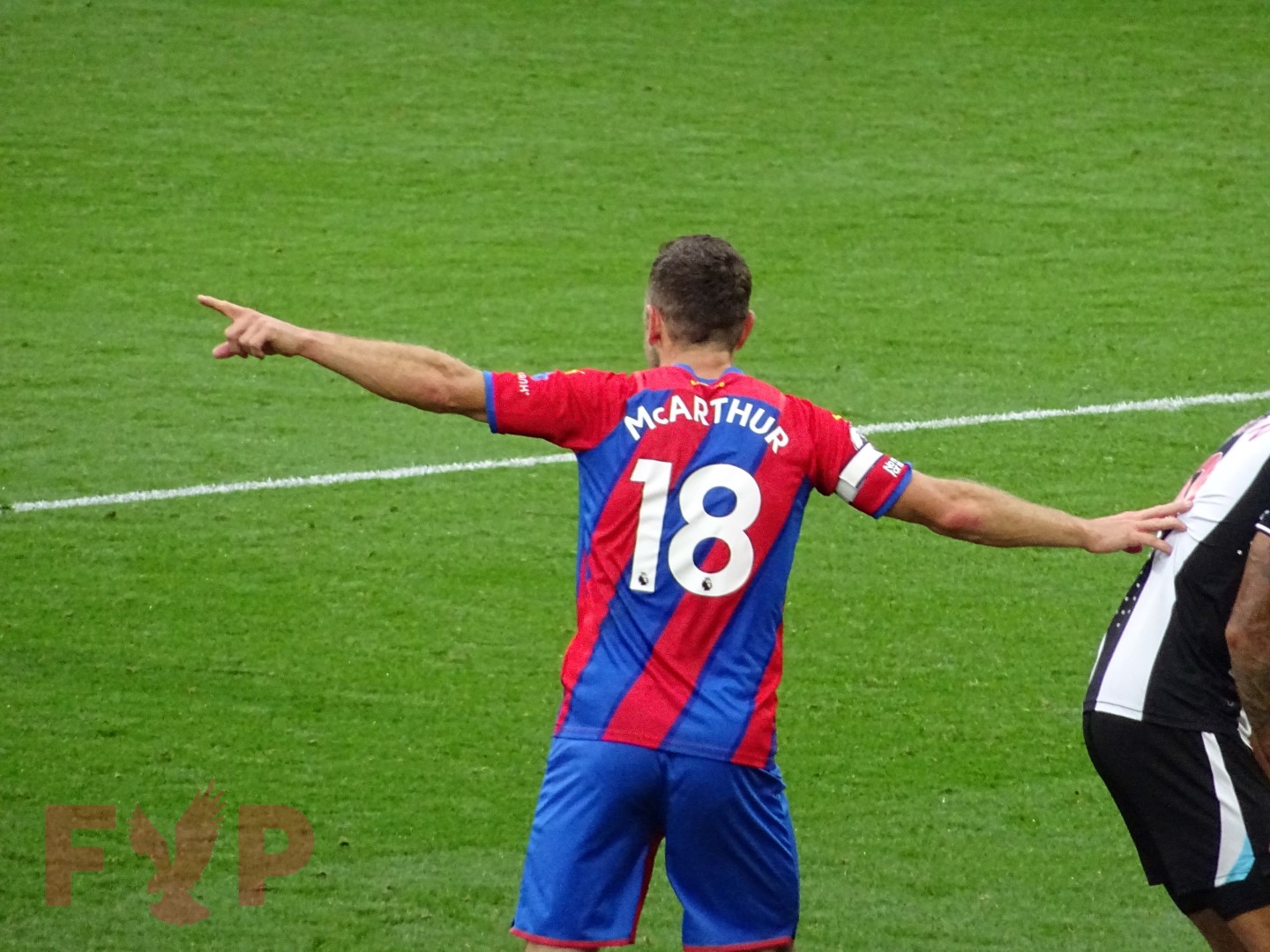
McArthur NUFC


Each time Palace get a new manager, the role James McArthur will play is a question for them to answer. Some, like Roy Hodgson, take to him immediately. Others, namely Sam Allardyce and Frank De Boer were not convinced. Alan Pardew used him to plug his own tactical deficiency-induced gaps.

He is a midfielder often lauded for his work rate, his endurance and his stamina. But that misunderstanding does him a huge disservice; he is one who is technically very capable, both with the ball at feet and making space for a pass. It is the combination of these which makes him both the symbol of and perfect for the change in style from Hodgson to Patrick Vieira.

This really can be seen as the third iteration of McArthur at Palace. The first, signed with the backdrop of Palace’s close call with Malky Mackay and Neil Warnock joining, showed his ability to quickly move the ball as well as himself breaking lines into the final third, making him the perfect complement to Mile Jedinak and Joe Ledley. He was key in the early progress of Pardew, but as that manager lost his tactical way, McArthur was the fall-guy as the manager persevered with wanting Yohan Cabaye and Jason Puncheon to play deep in midfield together, meaning the Scot being used closer to the forward, negating key aspects of his game.


McArthur goal


It was under Allardyce where McArthur had a stint of not being a regular when fit but the beneficiary of that was certainly Hodgson. In the first season under Vieira’s predecessor saw McArthur’s second iteration at Palace, his skill and versatility combined to make him a key part of the team – whether narrow in a left or right wide midfield position or in central midfield.

We did not often see the dynamism mixed with his technical ability and moving with the ball for most the Hodgson’s time, however. A combination of managing injuries and tactical pragmatism, he played a more cautious role in the two seasons prior to this one and we didn’t get close to seeing the best of him. Last season closed with a prolonged spell out injured, something which seems to have been a blessing in disguise.

Under Vieira, his role has changed again and we are seeing the third iteration. To compliment Conor Gallagher’s vertical box to box game, McArthur is playing as a “carrilero” – a midfielder whose primary role is to work across the midfield line, always being available to the whole back four and then to break forward with the ball when the chance arises. This role suits him perfectly – it enables him to mix his game reading and vigilance with his ability to move the ball in progressive areas but also to drive forward himself. It brings to life elements of his game which for one reason or another has been packed away for a few seasons; the result is that he is impacting games in ways beyond working hard while also carrying the team from the old to the new.


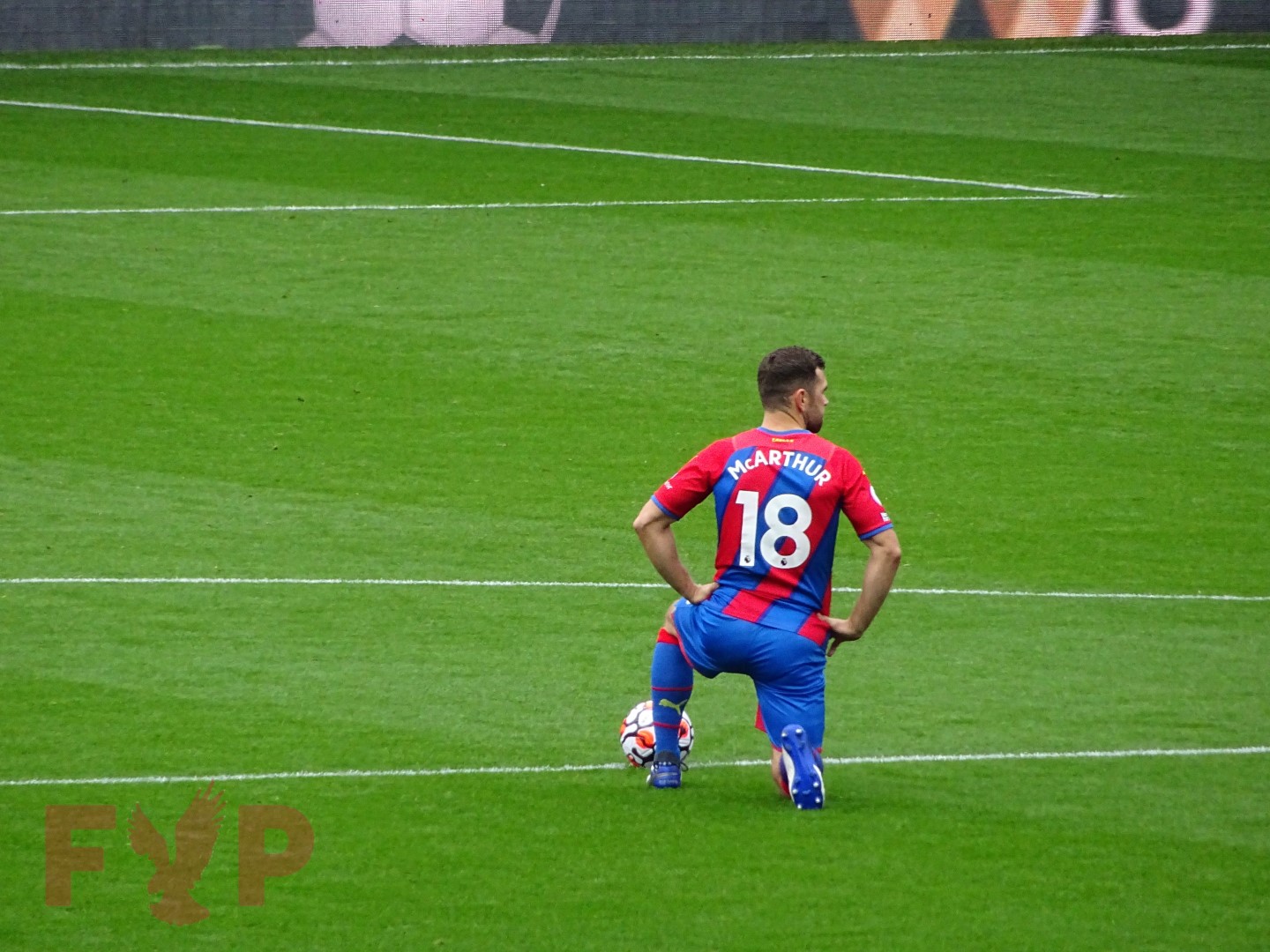
McArthur Knee NUFC


With a number of new players around him and a new way of playing, Jimmy is the key to the transition. Both as the type of player he is and his presence at the club since 2014. Somehow, he’s playing with the same energy in his mid-30s as he was when he joined, a testimony to his dedication and professionalism.

When we talk about best signings, pound for pound, since promotion, he is certainly in the conversation with Scott Dann and Puncheon (Wilfried Zaha goes without saying). And while both of those had a greater impact on results and season outcomes, it was over shorter but very identifiable periods of time. What separates McArthur from those is longevity and consistency.  When we think of either 2013/14 or 2014/15, we can pinpoint the impact Dann or Puncheon had and make a safe assumption as to our fate without either.

With McArthur, it is different – there is no season in time. It is McJedly. It is playing the unsung role which allowed Ruben Loftus-Cheek to link so effectively with Andros Townsend and Wilf. It is being part of one of the best team goals scored by any side at Anfield.  And it is now partnering Gallagher while linking Palace’s ball-playing defence with the forwards. A consistent presence, impactful in a number of roles and now an essential figure in Palace transforming as a squad and club.

James McArthur has become the face of this transition. He deserves a starring role and to see this transition through.


Crystal Palace 1-1 Newcastle United - Our Takeaways

Written by Alex Pewter

Alex Pewter takes a look at the key aspects of yet another frustrating Palace result.  

Benteke Disallowed Goal


Pragmatism vs Frustration

In breaking with the usual tone of the post-match takeaways, it isn't easy to be purely analytical in a game where the emotions ran so high and low in a second-half of football. 

Despite the number of years Palace has been in the Premier League, the era of Pulis, Allardyce, and Hodgson has ended. Their rugged brand of football alongside passionate home support defined Palace's place in the Premier League. 

This summer's vast turnover in coaching and playing staff has meant that the club is back at "Year One" of an entirely new project. Transfers, good and bad, are a footnote in annual accounts long since filed. The wins, the losses and the league finishes may be worth confining to the past.

Watching a Palace team dominate yet another Premier League at Selhurst Park as a possession football team is undoubtedly a new experience, or at least doing it this consistently. But when the team fails to win, it can seem like another side of the same coin.

Frustration is a part of being a football fan. Everyone is desperate to see a substandard team put away without needing them to go down to ten men. The general refereeing and VAR stole a moment of euphoria for a home-support desperate for a win to kick-start the season, having seen two wins thrown away in the dying seconds already in recent games.

If this is Year One of a new era, maybe the most pragmatic fan would take staying up by a point before continuing the rebuild next summer. But where is the fun in that? 

Anyway, on to the analysis:


The Midfield Lacked an X-Factor


As a counter-pressing unit, the pairing of James McArthur and Conor Gallagher exemplify what Patrick Vieira wants to do with his team. Both goals against Arsenal forced by turnovers showed what can be achieved on the counter, but playing at home as favourites is an entirely different story. 

With possession just shy of 80% in the first half, the ball moved fluidly from side to side, but as the probing of Newcastle went on, there didn't seem to be enough chances created through the middle.

In the latest Route to Goal, we mentioned that Palace failed to succeed against back-three/back-five defences. Newcastle, content to sit deep and allow Palace as much possession as they wanted, came to take a point and succeeded in that goal.

The second half became a different story as the team pushed on urgently, but the opening 45 minutes felt like a wasted opportunity from Patrick Vieira's side. Having racked up 337 completed passes and 14 crosses, it resulted in only five shots, one of which hit the target.

Marc Guéhi's heat map shows how high-up the pitch the central defenders could get without the threat of being countered, almost playing as central midfielders based on their positioning.


Heatmap NUFC 21Source: SofaScore


The central midfield ahead of them, despite that support, didn't appear capable of finding the necessary breakthrough. By design, the back-five defence looks to nullify the threat out wide by giving a natural double team on wingers. But that overcorrection is more likely to leave a softer middle, one to take advantage of beating.

McArthur, in particular, had a tidy performance. He amassed plenty of touches with over 90, and his passing was accurate enough at ~80% completion. The question was whether he could, or did enough, to break through a defence happy to allow all the sideways passes.

Possibly given the squad's strength compared to last year, the manager doesn't need to be as wedded to the same three central players in midfield for each opponent.  

Taking a look at McArthur's role in this isolated game is far from criticising him as a player this season. Would Jeffrey Schlupp, who adds more of a direct dribbling threat and dynamism from a central position, be a threat to a deep defence? 

Likewise, with Milivojević, who we have praised as a potentially crucial part of Palace's passing game, is he made obsolete against a team not willing to give space behind a full-back for him to play switched passes? Perhaps that means you could play Will Hughes as a deeper midfielder to change the balance once more, who is a more natural carrier of the ball. 

Hindsight is always 20/20, but Vieira can still learn from a disappointing result as the season progresses.


Benteke Guehi NUFC


VAR Tarnishes Benteke's Shine

Christian Benteke is back, he's dominant in the air, and he was the goal threat against Newcastle on Saturday. His redemption arc continues to delight Crystal Palace fans, who must still harbour some doubts after all the drought years. 

All four "big chances" fell to Benteke as he rattled the woodwork on two occasions, scoring with his third header before and finding the side-netting with his left-footed effort. His outstanding vertical jump for the disallowed "winner" doesn't make it into the end of game statistics but was an effort worthy of capping one of Benteke's best performances in a long time. 

Where Palace struggled to make an impact through the middle of the pitch, their crossing game, either from Olise or Mitchell, was the threat Newcastle struggled to defend. 

His relationship with Odsonne Édouard is an interesting one, as the new arrival from Celtic plays as the inside-left forward with a different style to Wilfried Zaha. Less likely to be an out-and-out dribbler, Édouard is a good foil for Benteke, as he looks to play off him to create chances, making them both effective in their respective roles. 

Édouard won't be credited for stepping over McArthur's pass in the second half, turning it into a slide rule through ball for Benteke. Where Patrick Vieira's strikers have historically had few touches on the ball, Benteke's 47 against Newcastle is a season-high, in part due to his new partnership with Édouard.

Benteke will want the two chances with his left foot but could have easily come away with a hattrick in the air. Detractors of VAR will say that it removes physicality from the game, that it is opaque where DRS is a transparent process in international cricket. In this case, it killed the thrill of a winning goal.


Defensive FK 2 NUFC


Corner Woes Continue


The previous two points have been about the attacking side because that is precisely what the game against Newcastle should have been. An attacking display, defeating a team struggling in the bottom three, proving in points rather than xG that the team is worthy of better results and a higher league position. 

Palace's inability to defend corners is a continuing worry and isn't a new one. Whether in the first or second defensive phase, too many goals are coming from this Achilles heel. Defending corners appeared to be an issue in pre-season that could have been down to the tactical installation in other areas but has also become a fixture in the Premier League.

Worthy of breaking down in detail in the future, it isn't as though the players have changed so dramatically that there is an obvious shortcoming on paper. Christian Benteke has been an asset defending the near post for years. The goalkeeper is the same, and neither of the new centre backs is particularly undersized.

Therefore, it would appear that the issue is tactical, that the team isn't stopping the second and third ball around the area. If Crystal Palace needs to employ a specialist coach to help solve this, they ought to be scouring Europe and the world to find one. 

Callum Wilson's finish in isolation was stunning, but that ball should never have fallen to him. A dampener and possibly an unnecessary one. 


The xG Battle


xG NUFC 21Source - https://understat.com/match/16460


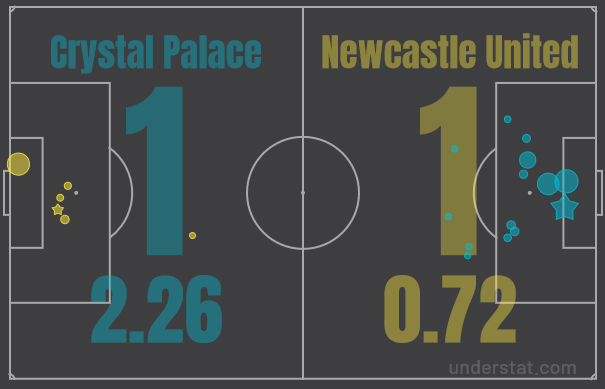
Palace had the edge in this fixture in terms of chances. Benteke is credited with 1.78xG on his own from the four key opportunities, which would have been enough to win the game on another day. This figure excludes his disallowed header, scrubbed from the record after the foul.

The Palace end of the "shot map" may look like domination, but Newcastle blocked six of these as they fully committed to the cause and snatched a point.

Based on xPTS, which looks at the balance of chances in each game, Palace currently would be worthy of a top ten place. Brighton was the meme over the last couple of seasons when it came to winning on xG but being unable to score. Let's hope Palace aren't about to emulate that.

On the Newcastle side of things, Callum Wilson's close-range shot in the first half hit the wrong side of the net but was the only decent chance the Palace defence gave up before the set-piece mishap. 


Next Up: Manchester City


Sigh. The fixture list does have a habit of kicking teams when they are down. Pep Guardiola's team continues to be impressive and will be a considerable challenge for their former U23 manager. 

On paper, this is a complete free-hit, given the squad's strength at City's disposal. Take your pick of Bernardo, Grealish or Foden as to which midfielder is more dangerous. But stranger things have happened in football. 

A "softer" part of the fixture list begins after the trip to Manchester, but with matches coming thick and fast from here until the end of the year, rotating elements of the team might not be as risky as it seems.


Protecting the Goal - How Crystal Palace Defend Corners - Part One

Written by Alex Pewter
Here, with a two-part series, Alex Pewter focuses on one of Palace's greatest weaknesses -- the dreaded defending of corners. 
 
Defensive FK 2 NUFC


Part One


Palace's Corner Problem


Nine games into the season, Crystal Palace have had to defend 48 corners in league fixtures. These corners have resulted in 23 shots on goals. Six of them have found their way past Vicente Guaita and the Palace defence. 

In percentage terms, that means Patrick Vieira's side has conceded from 12.5% of the corners they've faced, 23.1% of the times the opposition gets a shot away, either in the first or second phase of defending. 

Palace has given up 108 shots in total this season. Once you remove the shots from corner phases and Mikel Alonso's free-kick in the league opener, then Palace, on average, concedes a goal every 0.08 shots. It is 0.13 with set pieces, joint worst in the division with Newcastle and Norwich. 

Credit where credit is due, overall, Palace have restricted teams to relatively few shots. They are 7th in the league for the fewest shots, although a much higher percentage find the target than the sturdiest defences. 

Those overall shot totals remain skewed by the performances of the team against corners. Newcastle is the most recent example, being the difference between a win and a draw. 

Palace's defensive setup on corners hasn't been an apparent weakness over the last four seasons. Hodgson's various lineups conceded 8.5 league goals on average per season.


Multiple Phases


Opta defines a goal conceded "directly" from a corner with quite a narrow lense, as by their statistics, only two goals have been conceded from corners this season. 

Those goals, both the aforementioned Callum Wilson goal and Mo Salah at Anfield, ignore the bigger picture. Sadio Mane's rebounded effort for Liverpool wasn't the initial shot but was "direct" from a corner, even if it wasn't the first shot. 

Defending corners, therefore, becomes about stopping multiple phases of attack. There is the initial cross to deal with, either directly or from a short pass. Once cleared, the defence needs to shut down a follow-up shot or cross quickly.

Stopping that second phase is about quickly organising and resetting your defensive shape. If the second ball leads to a cross, the team must have already cleared their lines and stepped up as a unit. This increases the chances of catching forwards offside.

If facing a shot from the second ball, the midfielders or shorter players less likely to be in the aerial tussle will have to show the anticipation shown at the other end of the pitch. A team cannot afford passive watchers of the ball. Bodies need to be on the line to block.


Choosing a Scheme


It's overly simplistic to think any team operates a single scheme when defending corners, but they are often categorised into the "traditional" man-to-man and zonal marking. 

Old Liverpool central-defenders / former-pundits on MoTD would undoubtedly scoff at the idea of "European" zonal marking, but it has its merits alongside the man-to-man focus. 

Most teams use a hybrid system, which in truth, even the older style of man-to-man marking used to an extent having a player on the front and back post. As anyone under 5'9" would have experienced in Sunday League football.

Whether it was Glenn Murray and Marouane Chamakh of old or Christian Benteke, defending the corner of the six-yard box for the low or near-post is a typical example of zonal marking. They have a designated area to protect, regardless of how the opposition is set up. This can be replicated across the six-yard box, as that is the crucial area to defend, and players can move out to attack the balls closer to the penalty spot.


Zonal

If the attacking team adds a short option or has more players outside of the box, it drags more defenders away from the goal. Settling on more zone setup helps prevent teams from dictating on how to defend. 

Ultimately finding the way that suits the players at your disposal is the key. 

The Role of the Keeper

In general, the goalkeeper is set up centrally in the goal, drifting out to deal with the out-swinger and moving towards their line for the in-swinging ball. 

Size does matter when it comes to stopping crosses in general, coupled with long arm lengths. It's no surprise when you look at the percentage of crosses stopped by a goalkeeper this season, Robert Sánchez, Illan Meslier, and Alex McCarthy lead the way. The first two are listed at 6'6". Of the top six players, and only David Raya would be considered "undersized" in the Premier League. 

Vicente Guaita, in this respect, compared to other 'keepers, isn't naturally as dominant in the air. He is a good shot-stopper and has proven invaluable in that sense at times. But it isn't fair to expect him to come for crosses like Nick Pope does, consistently for Burnley. It would seem that he has to overreach and punch the ball more frequently under Vieira, and there are fewer clean catches in his six-yard box. 

Under Roy Hodgson, it appears Guaita was given a "cleaner pocket" to work inside of. Hodgson had the benefit of Gary Cahill or Scott Dann, who were able to remove more of the pressure in this area.


Possible Solutions:


Given what we have seen this season, what areas could help improve Palace's defending of corners? 


Remove the Player from the Near Post


Having a player on the near-post is there, in theory, to prevent a goal. Preventing the initial header/shot is arguably more valuable, as even when Palace are winning the first header, it currently isn't always the best clearance.

In the case of Palace's conceded goals this season, the issue hasn't been losing out in the first defence phase, but rather the second. Taking Tyrick Mitchell away from the front post also creates a channel for a striker to be caught offside in the second phase, which is helpful in an era of VAR reviews. 

Spurs corner 1


Add More Zonal Marking


At Palace's defensive peak in year's past, the core of the man-markers would have contained Damien Delaney, Scott Dann, and Mile Jedinak. Each was a physical player, experienced, and suited to winning the majority of their aerial battles. 

Joel Ward likely wouldn't have been in the top three players to be a man-marker, yet he now finds himself one of the three in more cases, especially when Cheikhou Kouyaté isn't in the side. 

By reacting to their designated player, rather than watching the ball's flight, the attacking player already has the advantage in all cases. Coupled with Palace's ball-playing central defenders and Ward, who aren't renowned for being exceptional headers, this becomes a weak spot. 

Switching to more of a zone scheme, the likes of Andersen can be designated an area to attack the ball rather than reacting to his man, which may suit him better. Protecting the six-yard line at all costs.

Andersen, in particular, is currently having a down year winning aerial duels in this instance or open play. Whilst it is likely, he will improve back to his usual average. At the moment, he is winning 12% fewer than Gary Cahill did last season. A switch away from tracking a single player could help him.


Focusing on Organisation


Conor Gallagher and James McArthur are exceptional at closing down and turning the ball over higher up the pitch. But this same skill set doesn't appear to be as effective on the edge of Palace's area. 

Having a set plan to push out the line of defence requires leadership and organisation, and the players in front of them need to make sure they are first to the second ball. They cannot be passive or ball-watching, as the team needs to focus on defending as a unit. 

Moreover, corners should present a chance to counterattack. Having a defined place to clear to each time, much like an "outlet" pass in basketball, Palace can take advantage of the pace of a Zaha or Olise on the break.

Practice makes perfect, so this is about repetition, repetition, repetition. As the pressing game outfield has improved as the team is adjusting to the pressing game, Patrick Vieira can apply the same ethos to this one, which must have happened under Tony Pulis. As a stickler for working on set-pieces, offensively and defensively, Palace had a reputation for being a good set-piece team in his short stay.
 
 
Liverpool corner 1
 

Using a Specialist Late in Games


If the Brighton, Arsenal and Newcastle games proved anything, it is that Palace hasn't been tremendous at holding onto their leads. The introduction of James Tomkins was designed to add more defensive capability, but the area became more congested as a result.

While subbing off a central defender may not be a route that managers often go down, Palace's pairing primarily is there to build the possession game to attack, rather than being "stoppers" at the back.

As Palace look to close out more games with a slim lead, utilising James Tomkins and his experience does make sense. A specialist player who deals with long-balls and corners seen at the end of a game could be a cutting edge and avoid disrupting the midfield shape in front of the defence. 


Hiring a Specialist Coach


If the current coaching staff cannot fix the issue, then find a coach that can. We have seen teams like Liverpool bring in consultants to work on corners and throw-ins. A hire like this is a worthwhile exercise, especially given the monetary value for each league position.  

Alternatively, if this isn't a coach from the "new" generation, looking at part-time senior staff who are used to "old school" football could be another way to get back to defensive fundamentals.


In part two tomorrow, we will look at each goal conceded to break down what went wrong.


The Case For: Jordan Ayew

Written by Robert Sutherland

This isn't going to be a hugely popular article. The opinions contained within go against the grain of what most Palace fans feel. But Jordan Ayew's continued inclusion in the Palace team needs to be assessed, and the rationale behind it needs to be explored. We've used FBref to look at his contribution to this Palace side. 

Ayew Tottenham Running


The Unconventional Winger


Ayew isn't your typical winger. He hasn't been for much of the time he's been at the club. But it's because of what he does in midfield and defensive areas that he is included in the side, whether managed by Roy Hodgson or Patrick Vieira.

Much of the focus when critiquing his contributions to the side are focused on his lack of goals and assists. He doesn't make or take chances, and thus what he does do isn't given the credit it deserves. 

Just as when Hodgson stated that Christian Benteke's inclusion in the side wasn't just about the goals he scored but the goals he prevented in Palace's own penalty area, so Ayew's inclusion in the side isn't just about attacking but about defending.


Ayew Liverpool Clearance


The Defensive Contributor


Ayew's attacking stats aren't the prettiest. He doesn't score, rarely assists, doesn't really produce chances -- and yet he plays a vital role in the side. 
Using FBref to look at his statistics, compared to the Premier League's wingers this season, Ayew is in the 90th percentile for attempted tackles, completed tackles, tackles in the defensive third and tackles in the middle third.

He is the top ranking winger for putting pressure on opponents and tackling dribblers, applying pressure an average of 23.4 times per game. He also ranks highly for ball recoveries. 

Tellingly, he falls closely behind former Palace winger Andros Townsend for total tackles, tackles won, blocks, passes blocked and interceptions.


Why Does it Matter? 


It's not always pretty but what Ayew does provides cover for his teammate Joel Ward, who doesn't have the kind of recovery qualities that Tyrick Mitchell has on the opposite wing. 

This isn't intended to be a criticism of Ward, but compared to Mitchell per 90 minutes, he completes fewer tackles, applies less pressure, is less successful when he does apply pressure, and unlike Mitchell applies it mostly in the final third.

While Mitchell is able to release the ball and then follow it (and often run beyond Zaha, taking his opposing defender with him) Ayew doesn't have that kind of luxury or support.

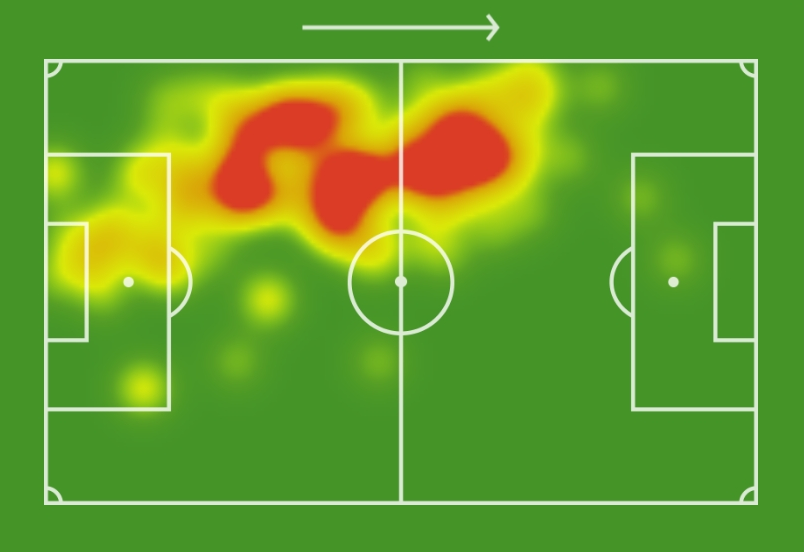
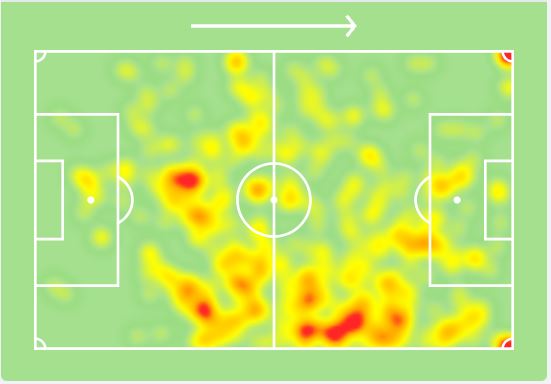
One area of focus that doesn't get much coverage is how Ayew's positioning and defensive work also allows Conor Gallagher to drift into wide positions. His heatmap, provided by Sofascore, shows that he frequently occupies the right side of the pitch -- often in advanced areas.

Ayew is a team player. There are parts of his game which are sacrificed for the greater good of the team, even if they aren't obvious on immediate viewing.  

Gallagher heatmap


The Olise Option


Everyone wants to see young players make a difference in the Palace side, and when it's someone with as glowing a reputation as Michael Olise, that pressure to include him is just going to grow.

Olise is an exciting prospect. His contribution against Leicester City was immediate and underlined his qualities. But it's clear that for the manager, the young signing is a project. 

The Premier League is ruthless. The key to mitigating that ruthlessness is focus and teamwork, and the greatest concern for most managers is that their young players learn that. It was a challenge that Hodgson had to face with Eberechi Eze.

Much was made of Hodgson's comments that Eze needed to learn the defensive responsibilities. The same will apply to Olise. Vieira won't need Olise to become a defender but he will need him to learn where to position himself when Palace don't have the ball, and how to recover that position promptly.

It's not to say that Olise can't do it. But when Vieira has someone who is as effective at doing it as Ayew is, to make that change promptly is going to be risky -- and while Vieira hasn't been too risk-averse since his appointment, it's likely that Olise's introduction to the side will be progressive rather than immediate. 

Ayew still has a role to play, even if it doesn't excite.